Recommended by Manish Jaradi
How to Trade AUD/USD
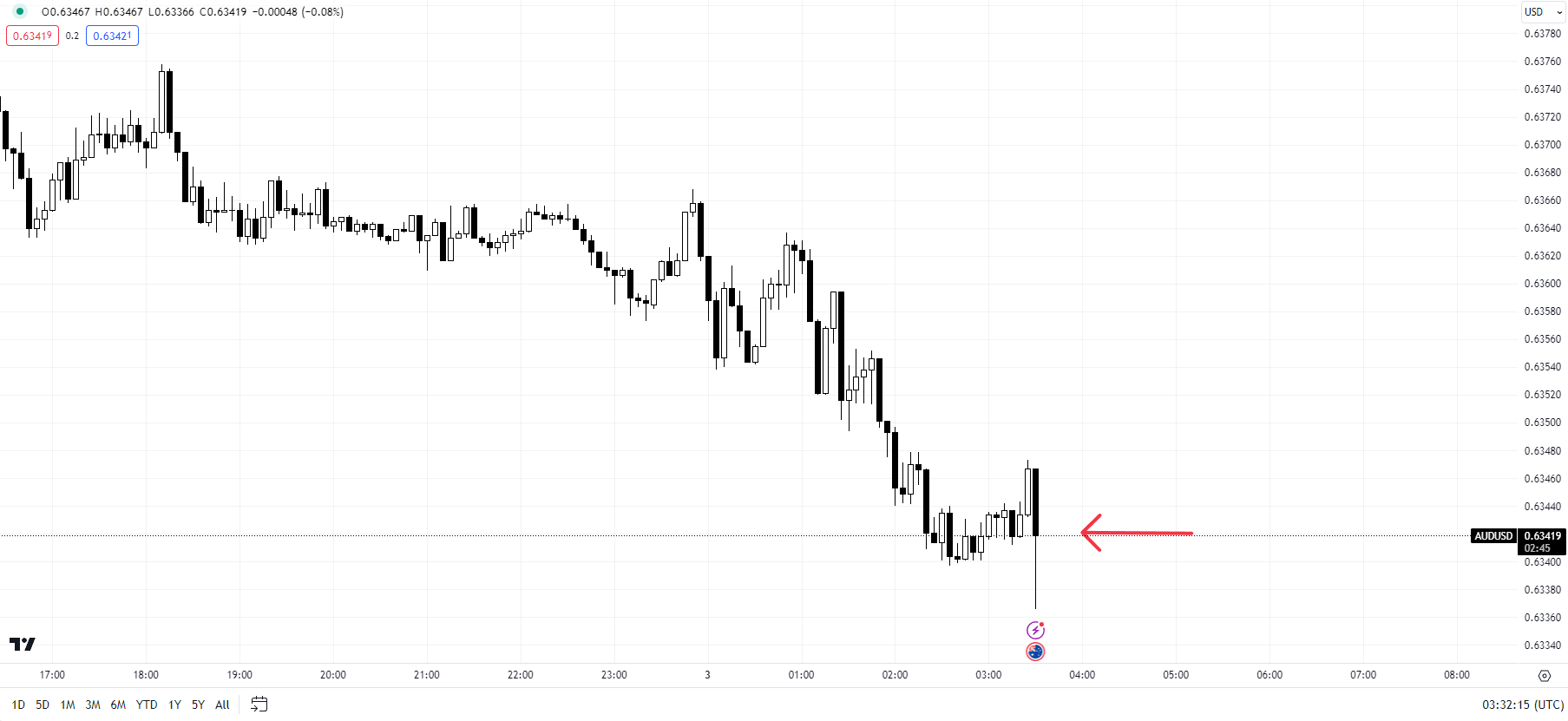
The Australian dollar held early losses after the Reserve Bank of Australia (RBA) kept benchmark interest rates steady, in line with market expectations.
RBA kept the benchmark rate steady at 4.1% for the fourth straight month but said some further tightening of monetary policy may be required as inflation remains still too high and the labour market remains strong. The central bank maintained its central forecast for inflation returning to the 2-3% target range by late 2025.
Australia's CPI accelerated to 5.2% on-year in August, significantly above the central bank’s 2-3% target range. The recent sharp rise in oil prices poses upside risks to RBA’s inflation forecast and keeps alive the possibility of one more rate hike in this cycle. Markets are pricing in one more RBA rate hike early next year and broadly steady rates thereafter in 2024.
Chart Created by Manish Jaradi Using TradingView
Meanwhile, tentative signs of a trough in manufacturing activity in China are emerging - factory activity expanded for the first time in six months in September. This follows a spate of other indicators in August, including retail sales and easing deflationary pressures, that suggested economic growth could be bottoming in the world’s second-largest economy. Any improvement in China’s growth outlook could bode well for Australia.
Chart Created by Manish Jaradi Using TradingView
Furthermore, the US Congress agreed on a last-minute deal to prevent a partial government shutdown briefly supporting AUD. However, broader risk appetite has remained in check amid surging US yields driven by higher-for-longer US rates view. Fed Governor Michelle Bowman reinforced the view on Monday saying she remains willing to support another increase in the central bank’s policy rate at a future meeting if incoming data shows progress on inflation has stalled or is too slow.
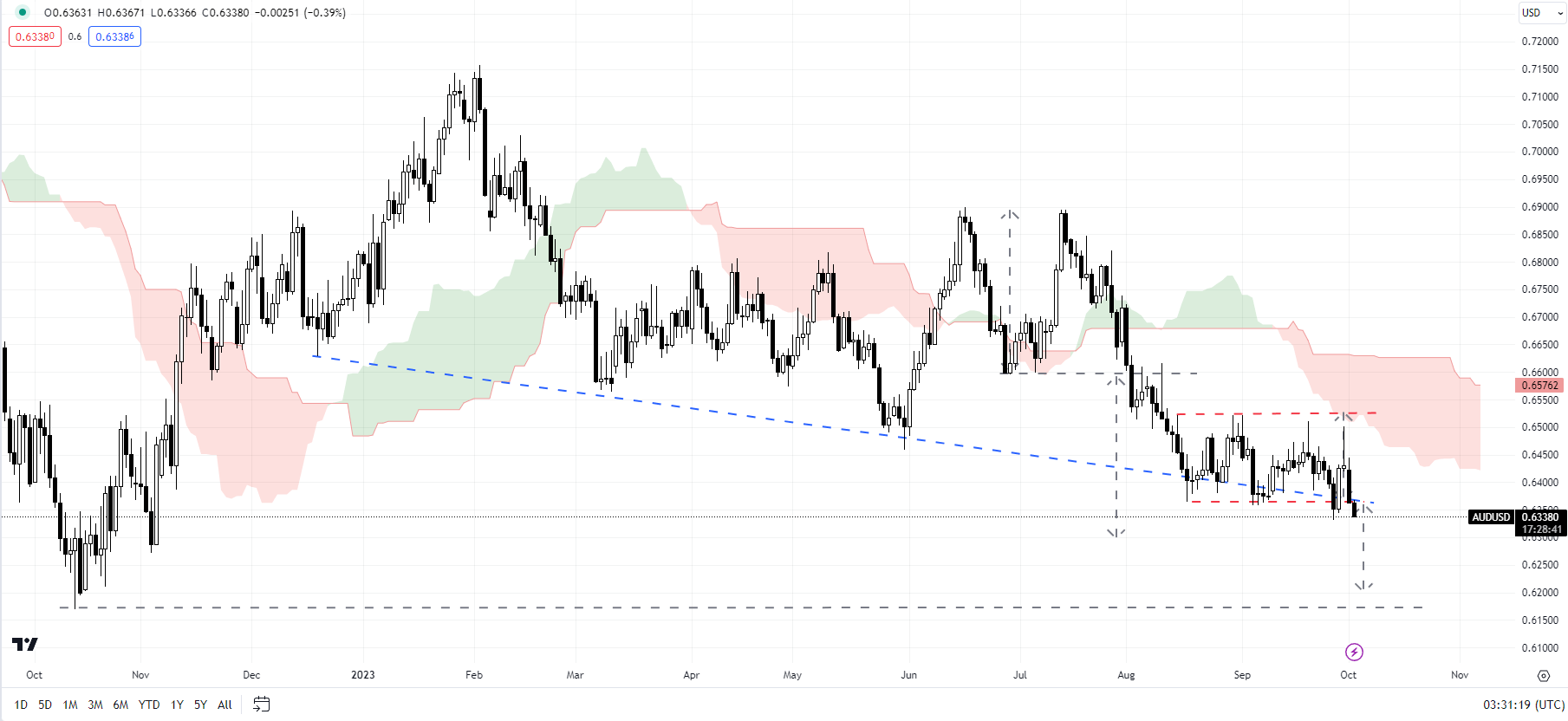
On technical charts, AUD/USD has gone sideways over the past month, with stiff resistance at the late-August high of 0.6525 and quite strong support at the August low of 0.6350. For immediate downside risks to fade, AUD/USD needs to rise above 0.6525. Such a break could open the way toward the 200-day moving average (now at about 0.6675). On the downside, any break below 0.6350 could expose downside risks toward the October 2022 low of 0.6170.
Chart Created by Manish Jaradi Using TradingView
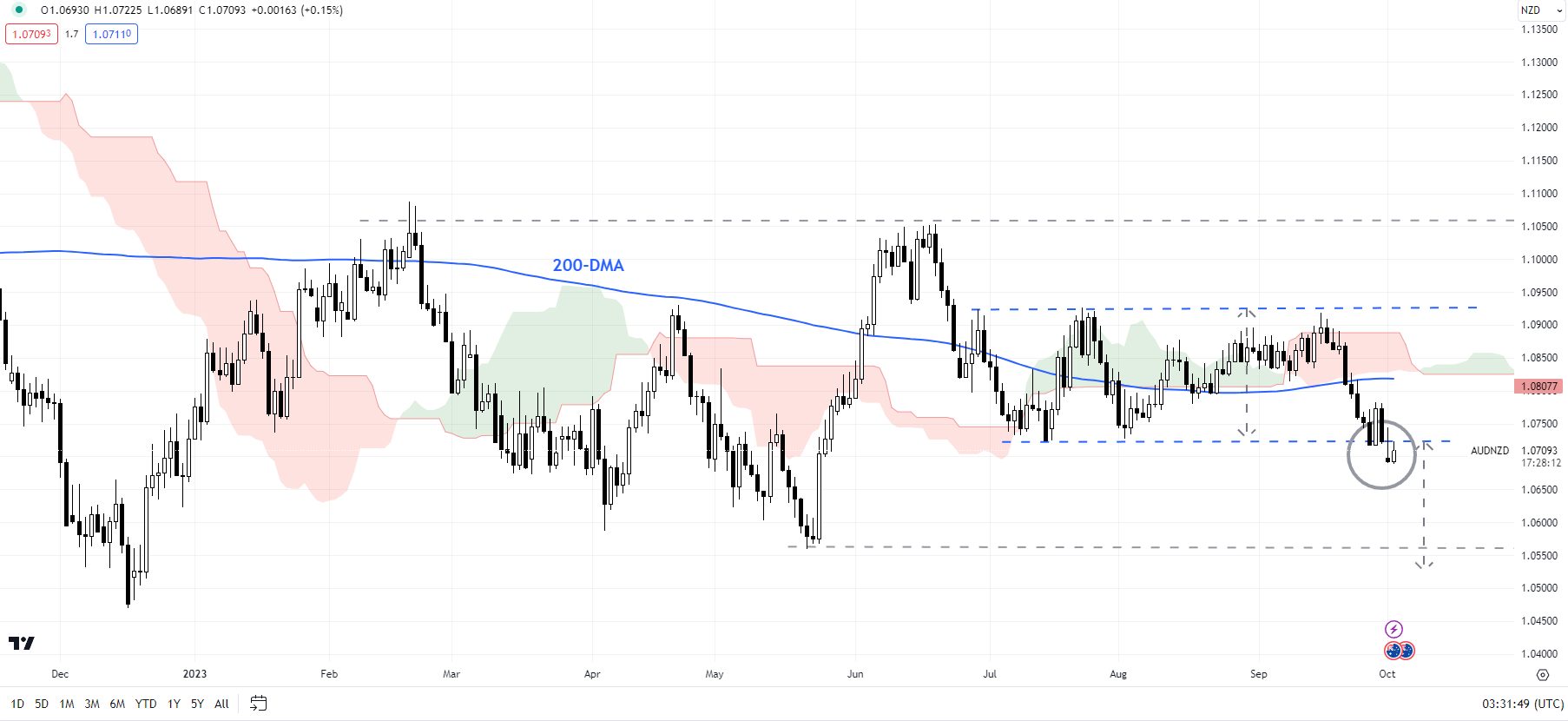
After remaining sideways for two months, AUD/NZD is attempting to break below the lower end of the range at the July low of 1.0720. Such a move could clear the path initially toward the May low of 1.0550, not too far from the December low of 1.0470.
--- Written by Manish Jaradi, Strategist for DailyFX.com
--- Contact and follow Jaradi on Twitter: @JaradiManish
 |
"Simply a Must Read for Every Serious Forex Beginner" Available at Amazon Now also for Kindle
|